

As Professor Robert J Balfour is inaugurated as Vice-Chancellor and Rector of the University of Western Cape (UWC) in South Africa, we celebrate the exceptional group of African scholars working in Education who have been supported by the Cambridge Trust, and the positive impact they have made on Higher Education.
The Cambridge Trust has brought together many extraordinary scholars from Africa. What unites this group of talented educationalists is their commitment to using education to tackle social inequality, drawing on their personal experiences to develop new inclusive educational policies and highlight the important role of leadership in breaking down barriers related to poverty, social exclusion, and sexual and racial discrimination.
Now appointed to leading roles in university governance in Africa and the UK, they share a drive to reshape education systems to enable others to share in the wealth of opportunities that education gave them. Let’s meet them…
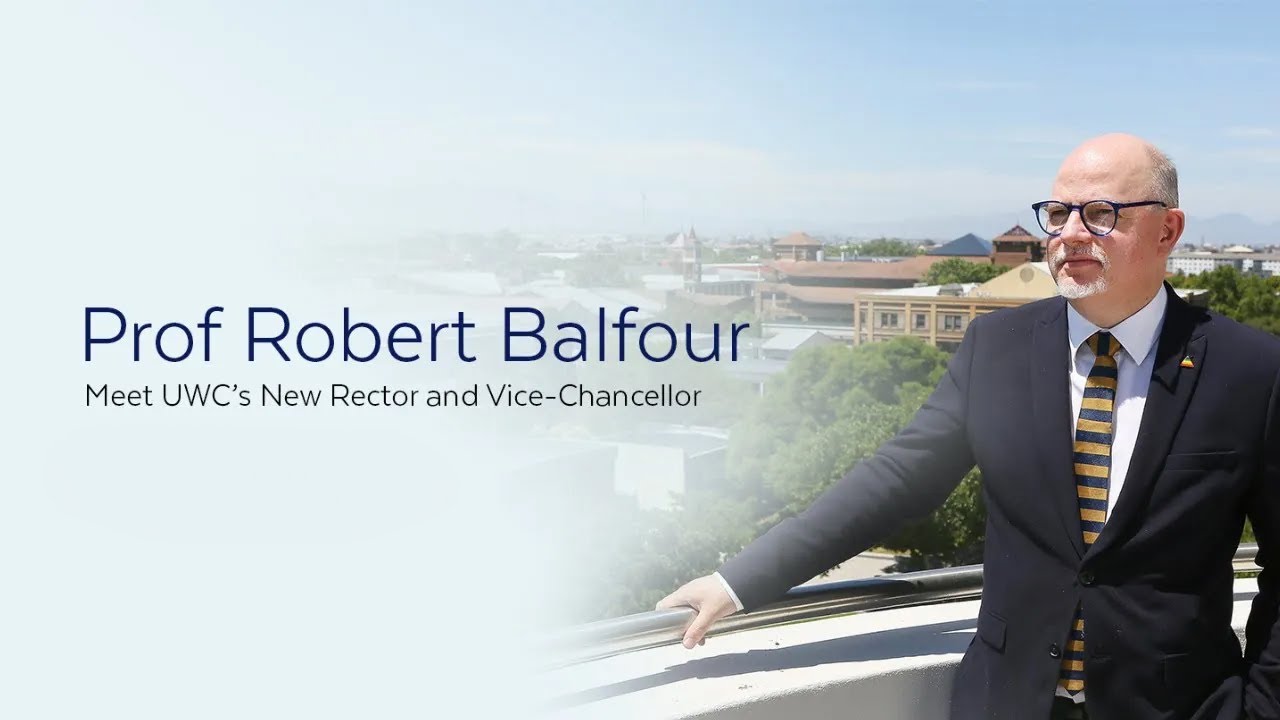
Robert Balfour’s impressive appointment at UWC in February acts as fitting recognition for the outstanding career he has built since completing his PhD in the Faculty of Education at the University of Cambridge, under the supervision of Professors Michael Evans and Madeleine Arnot.
Having developed an international reputation for his work on multilingualism, equity and postcolonial studies education, Professor Balfour made it his mission to foster growth in higher education as a way of addressing systemic social inequalities in South Africa and beyond. As he argued in his inaugural address at UWC – if change was needed then he would have to create that change himself.
“Freedom is never won in full or permanently. Sustaining and deepening it requires constant commitment”
Robert was promoted to a Professorship in English Studies and Education at the University of Kwazulu-Natal (UKZN) and later spent 7 years as Deputy Vice-Chancellor: Teaching and Learning, at the North-West University (NWU) in Gauteng, South Africa.
He has published rich research on aspects of educational inequality such as rural education disadvantage, digital literacy, and language rights. His manifesto Education in South Africa: Crisis and Change described how the country might move away from the race hierarchies of the apartheid period, and towards the ideals of race integration and the creation of a non-sexist and non-racist Rainbow Nation.
Gaining Cambridge Trust scholarships also greatly helped three outstanding South African scholars: Professors Sharlene Swartz, Thabo Msibi and Ranjani Naidoo.
Professor Sharlene Swartz has risen to become Divisional Executive of the Equitable Education and Economies research programme at the Human Sciences Research Council (HSRC) and Honorary Professor of Education at the University of Cape Town.
Her commitment to transformative education, reimagined inclusive economic development, and decolonising, emancipatory practices in research are demonstrated by her ground-breaking doctoral research Ikasi: the moral ecology of South Africa’s township youth revealing how young people living in poverty represent, understand, and enact morality and by Another Country: Everyday social restitution (2016) which drew on extensive discussions with the Archbishop Desmond Tutu.
Professor Thabo Msibi
has recently been appointed Deputy Vice Chancellor (Teaching and Learning) at the University of KwaZulu Natal (UKZN).
His doctoral research highlights the complex sexuality and gender issues within education systems, and his publications include Hidden sexualities of South African Teachers: Black male educators and same-sex desire, the co-edited collection Gender, Sexuality and Violence in South African Educational Spaces and his contribution as Associate Editor to The Oxford Encyclopedia of Gender and Sexuality in Education.
In 2022, Professor Msibi was appointed by the Minister for Basic Education to serve on the sixth Umalusi Council on educational standards.
Professor Rajani Naidoo. Formerly Vice-President (Community and Inclusion) at the University of Bath, in 2023 she was appointed Deputy Vice Chancellor (People and Culture) at the University of Exeter whilst also Visiting Professor, and Chair for Critical Studies in Higher Education Transformation, at Nelson Mandela University in South Africa.
Professor Naidoo’s research interests include public sector markets and new public management; trans-national higher education, global governance and international development; and the changing identity and nature of student participation in higher education.
She established the Professional Doctorate of Business Administration in Higher Education Management (DBA) which is aimed at creating critical university leaders from some 69 countries, focusing in particular on the importance of research on the special role of universities in society. Today she co-edits the Palgrave Macmillan series Global Higher Education and African Higher Education Dynamics (African Minds).


